Modern businesses rely on fast, dependable connectivity for almost every aspect of daily operations. Computers, servers, printers, phones, wireless access points, security devices, and other connected equipment all depend on a properly planned cabling infrastructure. When cabling is poorly selected or installed, businesses can experience connectivity problems, difficult maintenance, and limitations when expanding their IT systems.
The terms data cabling and network cabling are often used interchangeably, and there is considerable overlap between them. However, they can describe slightly different aspects of a business’s connectivity infrastructure. Data cabling generally focuses on the cables used to transmit digital information, while network cabling can refer more broadly to the physical infrastructure that connects devices and enables communication across a network.
We provide professional cabling solutions for businesses that need organised, reliable and scalable connectivity. For organisations in London and Harrow, properly planned data cabling installation and network infrastructure can provide a strong foundation for computers, internet connections, communication systems and network-connected devices.
What is Data Cabling?
Data cabling refers to the physical cables used to transmit digital information between devices and network equipment. These cables form an important part of an organisation’s IT infrastructure, allowing information to travel between computers, servers, printers, network equipment and other connected devices.
A well-designed data cabling system can support many different business applications. Depending on the requirements of the installation, data cables may be used for:
- Computers and workstations
- Servers and storage equipment
- Network printers
- Internet connections
- IP devices
- Communication systems
- Wireless access points
- Network-connected equipment
Common cable technologies include Cat5e, Cat6, Cat6a and fibre optic cabling. The appropriate option depends on factors such as bandwidth requirements, transmission distance, existing infrastructure, the environment and anticipated future requirements.
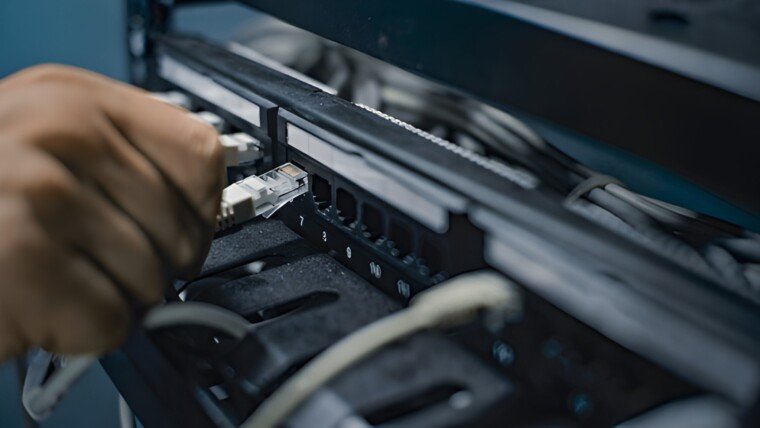
Professional data cable installation involves more than simply running cables from one location to another. Cables need to be routed appropriately, terminated correctly, labelled, and tested so the completed installation can provide dependable connectivity and remain manageable over time.
Read More: The Ultimate Guide to Data Cabling for Homes, Offices & Industries
What is Network Cabling?
Network cabling describes the physical cabling infrastructure used to connect devices and networking equipment so they can communicate as part of a network. It can therefore have a broader meaning than the individual data cable itself.
A business network may contain computers, switches, routers, wireless access points, servers, printers and other network-connected devices. Network cabling provides the physical connections that allow these components to communicate.
A professional network cabling system may include horizontal cabling, data outlets, patch panels, patch cables, network racks and connections to active network equipment. The installation needs to be planned according to the layout of the building and the requirements of the network.
Network cable installation should also consider organisation and future expansion. A properly structured installation makes it easier to identify connections, perform maintenance, troubleshoot faults, and add new devices without unnecessarily disrupting existing infrastructure.
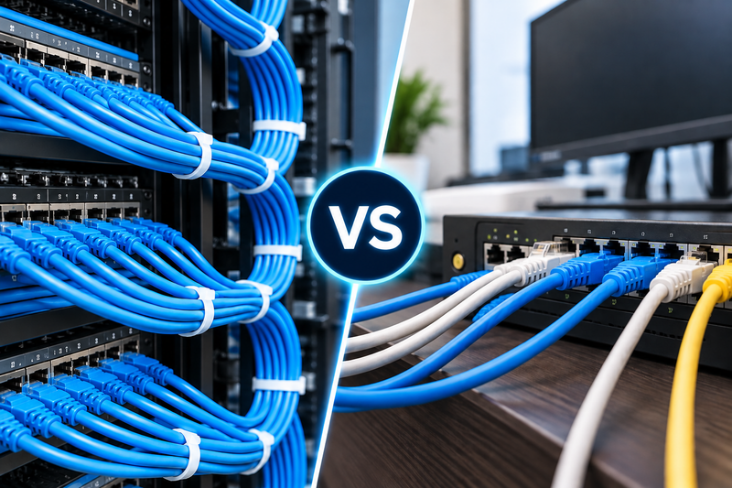
Data Cabling vs Network Cabling: What Is the Difference?
The distinction between data cabling vs network cabling is often contextual rather than absolute. Both involve physical connectivity for transmitting information, and the terminology is frequently used differently by IT professionals, installers, and businesses.
| Feature | Data Cabling | Network Cabling |
| Primary purpose | Transmitting digital data | Connecting devices across a network |
| Typical use | Data communication | Complete network connectivity |
| Components | Data cables and termination | Cables, outlets, patch panels and network connections |
| Applications | Computers, servers and connected devices | LANs, internet, office networks and infrastructure |
| Scope | Can refer specifically to data transmission | Often refers to the broader cabling network |
Data cabling can therefore be viewed as a key component of network connectivity. Network cabling may describe the wider physical infrastructure that brings together cables, outlets, patch panels and network equipment.
This is why businesses should not focus too heavily on the terminology when planning an installation. The more important consideration is whether the complete cabling infrastructure is correctly designed, installed, tested and organized around the organization’s operational requirements.
Data Cabling and Network Cabling: How Do They Work Together?
Data cabling and network cabling commonly work together as components of a wider network infrastructure. A workstation, for example, may connect to a data outlet through a structured cable. That outlet can connect through permanent cabling to a patch panel, which then connects to a network switch using a patch cable.
A typical installation may include:
- Data outlets for connecting workstations and devices
- Patch panels for organizing permanent cable connections
- Network switches for connecting multiple devices
- Routers for managing network traffic and internet connectivity
- Server connections for business applications and storage
- Network racks for organizing equipment
- Patch cables for equipment connections
- Fiber connections where high-speed or longer-distance transmission is required
This approach is often described as network infrastructure cabling. A properly planned installation can separate permanent building cabling from equipment connections, making the infrastructure easier to maintain and modify.
Both structured data cabling and structured network cabling are designed around an organised approach rather than isolated cable runs. This can be particularly valuable in offices and commercial buildings where the number of connected devices may increase over time.
Types of Data and Network Cabling
Different cabling types provide different levels of performance, bandwidth and transmission distance, allowing businesses to select suitable infrastructure for their current and future networking needs.
1. Cat5e Cabling
Cat5e is a commonly used copper cabling category for basic business networking requirements. It can support many standard network applications and may be suitable where existing equipment and bandwidth requirements do not justify a higher category.
2. Cat6 Cabling
Cat6 cabling provides higher performance capability than Cat5e and is widely considered for modern commercial installations. It can provide additional performance headroom for businesses that need reliable wired connectivity for computers, network equipment, and other devices.
4. Cat6a Cabling
Cat6a is designed for higher bandwidth requirements and can be considered where businesses want greater capacity for current and future network applications. Its characteristics can make it appropriate for larger commercial installations and environments where higher-performance infrastructure is required.
5. Fibre Optic Cabling
Fiber optic cabling transmits information using light rather than electrical signals. It is particularly useful for high-speed connections and longer transmission distances. Fiber can also be used for connections between network areas, buildings or network equipment where copper cabling may not be appropriate.
Selecting between copper and fiber should be based on the requirements of the network, distance, bandwidth, environment and planned infrastructure.
What is Structured Data Cabling?
Structured data cabling is an organized approach to designing and installing a building’s communications cabling. Instead of treating each connection as an isolated installation, structured cabling establishes a consistent infrastructure that can support multiple devices and applications.
A structured installation can incorporate data outlets, patch panels, network racks, cable management systems, horizontal cabling, and equipment connections.
For businesses, the benefits can include:
- Easier maintenance
- Better cable organization
- Simplified troubleshooting
- Greater scalability
- Easier future upgrades
- More consistent infrastructure management
Structured network cabling is particularly useful for commercial premises because businesses often need to add workstations, wireless access points, phones, security equipment, and other connected devices as their requirements change.
Why Professional Network and Data Cable Installation Matters
Professional installation is important because cabling is part of the physical foundation of a business network. Incorrect cable selection, poor routing, or inadequate termination can create problems that may be difficult to diagnose later.
During network cable installation and data cable installation, several factors should be considered, including:
- Selecting suitable cable categories
- Planning efficient cable routes
- Correctly terminating connections
- Testing installed cables
- Labelling individual connections
- Maintaining appropriate cable management
- Supporting network performance
- Considering safety and applicable requirements
- Allowing room for future expansion
Professional computer cabling services can also help businesses maintain a cleaner and more organised working environment. Well-managed cabling makes it easier to identify connections when equipment needs to be moved, replaced or upgraded.
Commercial Network Cabling for Businesses
Commercial properties have different cabling requirements depending on their size, layout and operational needs. An office may require connections for workstations, printers, phones, wireless access points and servers, while a warehouse may need connectivity across larger areas and for a wider range of network-connected equipment.
Commercial environments that can require structured cabling include:
- Offices
- Retail businesses
- Warehouses
- Commercial buildings
- Healthcare facilities
- Educational facilities
Commercial network cabling should be designed around the building rather than simply adding individual cable runs whenever a new device is installed. A structured approach can make the infrastructure easier to maintain and provide a practical foundation for future changes.
Businesses looking for network cabling services in London can benefit from discussing their current equipment, building layout, bandwidth requirements, and anticipated expansion before installation begins.
Interesting Read: Data Cabling for Small Businesses: What You Need to Know
How Data and Network Cabling Supports Security Systems
Network infrastructure is also increasingly important for modern security technology. Many security systems use network connectivity to communicate with monitoring equipment, authorized users and other components.
Depending on the system design, cabling infrastructure can support:
- CCTV systems
- Access control system
- Network-connected security devices
- Communication systems
- Remote monitoring
A properly designed network can provide the physical connectivity required for IP-based security equipment. This makes cabling an important consideration when security infrastructure is being installed alongside IT and communications systems.
For businesses requiring a security system installation service in London, planning the security infrastructure alongside the wider network can help avoid unnecessary duplication of cabling and equipment connections.
Benefits of Professionally Installed Data and Network Cabling
Professionally installed cabling can provide reliable connectivity, improved organization, easier maintenance, and scalable infrastructure while supporting the performance of modern business devices.
1. Reliable Network Connectivity
Professionally installed cabling provides consistent physical connections between network devices, helping businesses maintain dependable access to their IT infrastructure.
2. Improved Data Transmission
Using suitable cable categories and installation methods helps provide the physical capability required by the network and connected devices.
3. Better Cable Management
Organized cabling reduces unnecessary clutter and makes it easier to identify individual connections within a network rack or communications area.
4. Easier Maintenance
Clearly labelled and properly documented cabling can make troubleshooting and maintenance more straightforward when an issue occurs.
5. Scalable Infrastructure
Structured cabling can provide additional capacity and organized connection points for future workstations, devices and network equipment.
6. Support for Modern Devices
Modern businesses may connect computers, servers, wireless access points, IP devices and security equipment through their network infrastructure.
7. Long-Term Network Performance
Correct cable selection, installation, termination, and testing provide a stronger physical foundation for ongoing network operation.
Interesting Read: Benefits of Structured Data Cabling for Businesses
Which Cabling Solution Does Your Business Need?
There is no single cabling solution suitable for every commercial property. The appropriate infrastructure depends on the number of users and devices, building size, network requirements, bandwidth expectations, and existing cabling.
Planning should consider:
- Number of users
- Number and type of connected devices
- Building size and layout
- Required bandwidth
- Existing infrastructure
- Future expansion plans
- Network equipment
- Security and connectivity requirements
In many cases, data cabling and network cabling work together rather than representing two completely separate solutions. A professional assessment can help determine the appropriate cable category, outlet locations, patching arrangement, network rack configuration, and fiber requirements.
Why Choose AY Security Systems for Data and Network Cabling?
AY Security Systems provides professional cabling solutions for commercial environments in London and Harrow. Our approach focuses on practical installation, organized infrastructure, and connectivity requirements rather than treating cabling as a simple collection of wires.
Our services can support:
- Professional data cable installation
- Structured cabling
- Network cable installation
- Commercial network infrastructure
- Cable testing and organization
- Computer cabling services
- Network and security system integration
- Access control integration
Whether a business is fitting out a new commercial space, upgrading an existing network or adding new connected equipment, properly planned cabling can provide the physical infrastructure required for reliable connectivity.
Upgrade Your Business Network with Professional Cabling
Reliable connectivity starts with a properly planned physical infrastructure. AY Security Systems provides data cabling, network cabling, structured cabling, and commercial network infrastructure services for businesses across London and Harrow.
Whether the requirement involves new office cabling, an existing network upgrade, additional workstation connections, or infrastructure for network-connected security systems, professional planning and installation can help create an organized and scalable solution.
Contact AY Security Systems to discuss your data cabling and network cabling requirements and plan a suitable connectivity infrastructure for your business.
Frequently Asked Questions
Is data cabling the same as network cabling?
Data cabling and network cabling overlap significantly, but the terms can have different scopes. Data cabling commonly refers to cables used to transmit digital information, while network cabling can describe the broader physical infrastructure connecting network devices.
What is the difference between data cabling and network cabling?
Data cabling can focus on the physical cables used for data transmission, while network cabling may refer to the complete infrastructure connecting computers, switches, routers, access points, and other network equipment.
What type of cable is used for network installation?
Common options include Cat5e, Cat6, Cat6a, and fiber optic cabling. The appropriate cable depends on bandwidth requirements, transmission distance, network equipment, building conditions, and future expansion plans.
Is Cat6 better than Cat5e for business networks?
Cat6 can provide greater performance capability than Cat5e and may be suitable for modern commercial installations. The appropriate choice depends on the business’s network requirements, equipment, budget, and future infrastructure plans.
What is structured data cabling?
Structured data cabling is an organized cabling approach using components such as permanent cables, outlets, patch panels, racks, and cable management. It creates a consistent infrastructure that can be maintained and expanded more easily.
How long does network cable installation take?
Installation time varies according to the size and layout of the premises, number of outlets, cable routes, cable type, access conditions, and complexity of the network. A site assessment can establish the requirements before work begins.
Why should businesses use professional data cable installers?
Professional installers can help with cable selection, routing, termination, testing, labelling and organization. Proper installation can also make future maintenance and network expansion more manageable.
Can network cabling support security systems?
Yes. Network infrastructure can support IP CCTV, access control and other network-connected security devices where the system has been designed for network connectivity.
Do I need data cabling for an office network?
A wired cabling infrastructure can provide physical network connections for computers, access points, printers, servers and other equipment. The required installation depends on the office layout and the organization’s connectivity requirements.
Does AY Security Systems provide network cabling services in London and Harrow?
AY Security Systems provides data cabling and network cabling solutions for commercial requirements across London and Harrow, including structured cabling, network infrastructure and computer connectivity services.