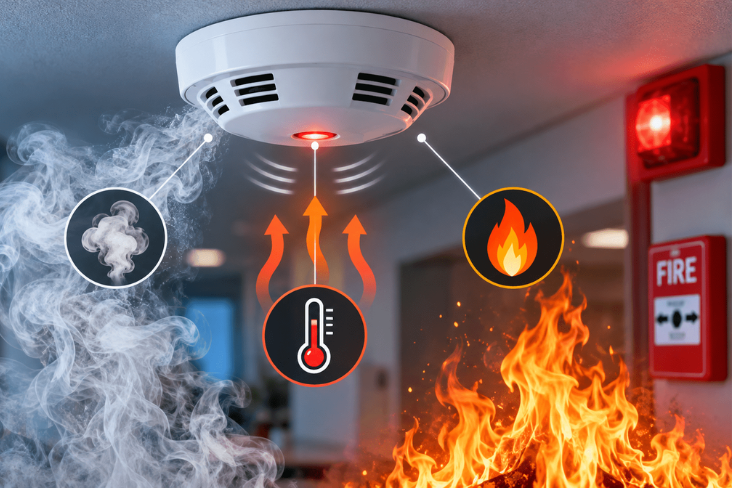
Fire alarms are designed to identify early signs of a fire and provide warnings before a dangerous situation develops further. Modern systems can detect smoke particles, rising temperatures, flames, and other indicators of combustion, depending on the type of detector installed.
A fire alarm system typically uses one or more sensors to monitor conditions within a building. When a detector identifies a potentially dangerous change, it sends a signal to the control panel. The system can then activate audible and visual warning devices and, where applicable, communicate with a monitoring service or other building systems.
Early detection can give occupants valuable time to respond, evacuate, and contact emergency services. This makes properly designed fire detection important for homes, offices, retail premises, warehouses, and other commercial properties. Professional fire alarm system installation in London can help ensure that detection equipment is appropriately selected, positioned, configured, tested, and maintained.
How Do Fire Alarms Work?
A fire alarm system works by continuously monitoring specific environmental conditions associated with fire. The exact process depends on the system design and detector technology, but the basic sequence is straightforward:
Detection → Signal → Control Panel → Alarm → Response
A detector monitors its surroundings for changes such as smoke particles or temperature increases. If the conditions reach the programmed detection threshold, the detector communicates with the fire alarm control panel.
The control panel acts as the central point of the system. It receives information from connected detectors and determines whether an alarm condition or another system event has occurred. Depending on the installation, it can activate sounders, visual alarm devices, remote monitoring connections, and other configured outputs.
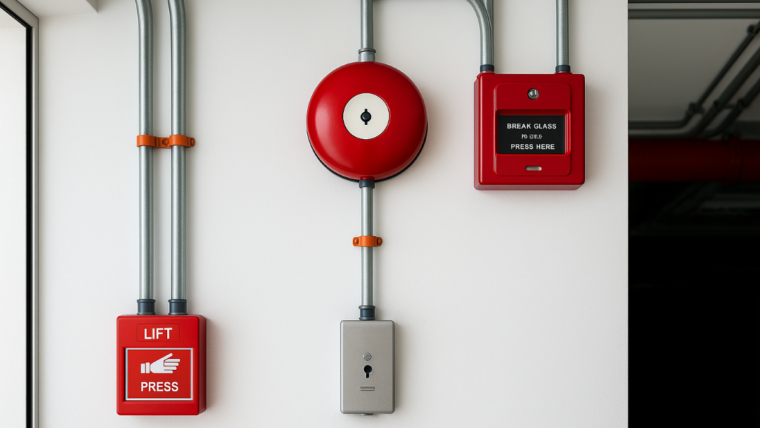
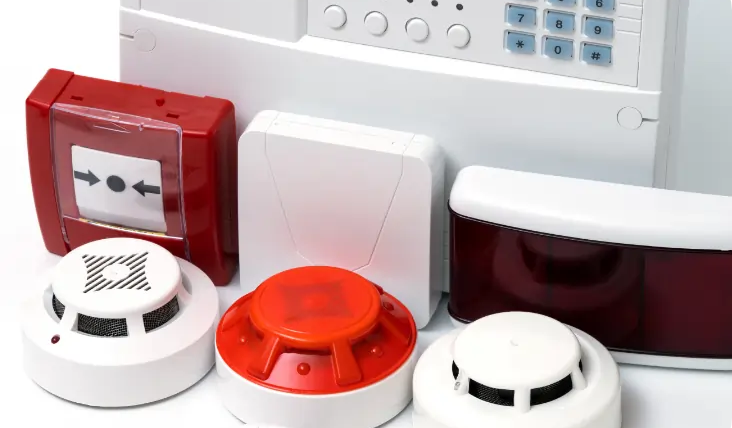
A standalone domestic smoke alarm can operate independently, while larger fire detection and alarm systems may contain numerous detectors, manual call points, sounders, visual indicators, control panels, batteries, monitoring connections, and interfaces with other building services.
How Do Fire Alarms Detect Smoke?
Smoke detectors are designed to identify airborne particles associated with combustion. When smoke enters the sensing chamber, it changes the conditions monitored by the detector. Once the detected condition reaches the required threshold, the alarm can be activated.
The way a detector identifies smoke depends on its technology. Modern smoke alarm sensors commonly use optical or photoelectric principles, ionisation technology, or a combination of sensing methods.
Understanding how fire alarms detect smoke requires looking at how these technologies respond to particles in the air rather than assuming that every detector simply “sees” smoke in the same way.
How Do Smoke Detectors Detect Smoke Particles?
Smoke detectors use specialized sensors to identify smoke particles in the air and trigger an alarm when concentrations reach a level that may indicate a potential fire.
1. Photoelectric Smoke Detection
Photoelectric detectors use a light source and sensing element inside a chamber. Under normal conditions, the light follows a defined path. When smoke particles enter the chamber, they can scatter the light toward the sensor.
When the detector identifies a sufficient change, it sends an alarm signal.
Photoelectric technology is widely used because it can provide effective detection of many types of visible smoke. The exact performance depends on the detector design, installation environment, and manufacturer specifications.
2. Lionization Detection
Ionization smoke detectors use a small electrical current within a sensing chamber. Smoke particles entering the chamber can interfere with the electrical conditions and cause the detector to identify a change.
This technology has historically been used for detecting certain fire conditions, although the suitability of any detector depends on the building, environment, applicable requirements, and system design.
3. Combination and Multi-Sensor Detection
Some modern detectors combine multiple sensing technologies. A multi-sensor device may evaluate smoke, heat, or other environmental indicators together rather than relying on one measurement alone.
This approach can help the system distinguish between normal environmental conditions and potential fire conditions. The detector’s programmed logic determines how different sensor readings contribute to an alarm decision.
How Does a Heat Detector in a Fire Alarm Work?
A heat detector in a fire alarm responds to temperature rather than smoke. It is designed to identify an abnormal temperature condition or a rapid increase in temperature, depending on the detector type.
Heat detection can be useful in environments where smoke detectors may be unsuitable because of dust, steam, fumes, cooking activity, or other normal conditions that could cause unwanted alarms.
Fixed-Temperature Heat Detectors
A fixed-temperature detector activates when the surrounding temperature reaches a predetermined level.
For example, if the detector is designed to operate at a particular temperature threshold, it will remain in its normal state until that threshold is reached. The exact operating temperature depends on the detector and its application.
Rate-of-Rise Heat Detectors
Rate-of-rise detectors respond to a rapid increase in temperature rather than relying solely on a fixed temperature point.
If the temperature rises unusually quickly, the detector can identify that change and initiate an alarm condition. This can provide an additional method of detecting a developing fire.
When Are Heat Detectors Appropriate?
Heat detection may be considered in locations where smoke detection could be affected by normal environmental conditions. Examples can include certain kitchens, plant rooms, garages, industrial areas, and other spaces where smoke, dust, or fumes are routinely present.
The choice between smoke and heat detection should be based on the property’s risks, environmental conditions, room characteristics, and applicable fire safety requirements.
How Do Fire Alarm Systems Detect Fire?
A fire does not always produce identical warning signs. Some fires may produce substantial smoke before temperatures rise significantly, while other fire conditions may produce intense heat or flames.
For this reason, a modern fire detection system can use several detection technologies.
These may include:
- Smoke detection
- Heat detection
- Flame detection
- Multi-sensor detection
- Manual fire alarm activation
- Other specialist detection technologies where appropriate
Each detector communicates information to the control panel. The panel processes the incoming signal and activates the appropriate warning or response functions.
A properly designed automatic fire detection system can therefore identify different indicators of a developing fire and provide an earlier warning than relying solely on occupants noticing smoke or flames themselves.
Interesting Read: Fire Alarm System Basics: Everything You Need to Know Before It’s Too Late
What Are the Different Types of Fire Detectors?
Understanding the main types of fire detectors helps explain why different buildings and rooms may require different detection technologies.
1. Smoke Detectors
Smoke detectors are designed to identify smoke particles within the surrounding air. Common technologies include:
- Photoelectric detectors
- Ionisation detectors
- Multi-sensor detectors
The appropriate option depends on the environment and the fire risks associated with the particular area.2.
2. Heat Detectors
Heat detectors identify changes in temperature and may use:
- Fixed-temperature detection
- Rate-of-rise detection
They can be suitable for areas where smoke detection may not be appropriate because of normal environmental conditions.
3. Flame Detectors
Flame detectors identify radiation associated with flames. Depending on the technology, they may detect specific infrared or ultraviolet wavelengths.
Common flame detection technologies include:
- Infrared (IR)
- Ultraviolet (UV)
- UV/IR
These detectors can be particularly relevant to certain industrial environments where fires may develop rapidly and produce identifiable flame radiation.
4. Multi-Sensor Detectors
Multi-sensor detectors combine two or more detection methods. For example, a detector may evaluate smoke and heat information together.
Using multiple indicators can help the system make a more informed detection decision and reduce reliance on a single environmental measurement.
What is an Automatic Fire Detection System?
An automatic fire detection system identifies potential fire conditions without requiring someone to manually activate the alarm.
Detectors installed throughout a property continuously monitor their designated areas. When a detector identifies a condition that meets its activation criteria, it communicates with the control panel.
The control panel can then activate sounders, visual indicators, remote signalling equipment, or other configured devices.
Automatic detection is particularly important in commercial premises because a fire may begin in an unoccupied area. A correctly designed system can provide an alert even when occupants have not yet seen or smelled smoke.
Professional fire alarm installation is important because detector type, coverage, spacing, wiring, control equipment, alarm devices, and system configuration all need to work together as part of a coherent fire detection strategy.
What Happens After a Fire Alarm Detects a Potential Fire?
When a detector identifies a potential fire, it sends a signal to the control panel, which processes the event and activates alarms, monitoring connections, or other responses.
The typical process can be represented as:
Detection → Signal → Control Panel → Alarm → Monitoring/Response
1. Detector Activation
A smoke, heat, flame, or multi-sensor detector identifies a condition that meets its programmed activation criteria.
2. Signal to the Control Panel
The detector sends information to the fire alarm control panel. Depending on the system, the panel may also identify the particular zone or device associated with the event.
3. Control Panel Processing
The control panel evaluates the incoming signal and determines the appropriate system response.
4. Audible and Visual Alarms
Sounders and visual alarm devices can warn people within the building. The type and arrangement of notification devices depend on the property’s design and applicable requirements.
5. Monitoring and Emergency Response
Where a fire alarm monitoring system is connected, the alarm condition may be transmitted to a monitoring service or designated receiving center.
The building’s emergency procedures can then be followed, including evacuation and contacting the relevant emergency services.
6. Integration With Building Systems
Depending on the installation, a fire alarm system may interface with other building systems. These can include access control, ventilation equipment, lifts, door release mechanisms, or other services where appropriate.
Fire Alarm Systems for Offices and Commercial Properties
Offices and commercial buildings can contain multiple rooms, floors, electrical equipment, storage areas, kitchens, plant rooms, and other environments with different fire risks. Fire alarm installation in commercial buildings therefore needs to be designed around the building rather than using identical detection equipment everywhere.
For example, an office area may be suitable for smoke detection, while a plant room or kitchen may require a different detection approach. Large premises may also require zoning, manual call points, visual alarm devices, monitoring connections, and other system components.
Professional system design helps ensure that detectors are positioned appropriately and that alarm signals can reach occupants throughout the relevant areas.
Businesses looking for an office fire alarm installation in Harrow can benefit from an assessment of the property’s layout, occupancy, use, fire risks, and existing fire safety arrangements.
Fire Alarm Systems for Residential Properties
Residential fire alarm systems provide occupants with an early warning when smoke or other fire indicators are detected.
Smoke detection is commonly used in homes, while heat detection may be considered for locations where smoke detectors could be affected by normal activities.
Correct positioning is important. Detectors should be installed in suitable locations where they can detect developing fire conditions effectively without being unnecessarily exposed to conditions that could cause unwanted alarms.
Regular testing is also essential. Residents should follow the manufacturer’s instructions and applicable fire safety guidance for testing, battery replacement, cleaning, and servicing.
Interesting Read: Protecting Your Family: The Importance of Working Fire Alarms
Why Professional Fire Alarm Installation Matters
A fire alarm system is only useful when its components are correctly selected, installed, configured, and maintained.
Professional fire alarm installers in London can assess the property and determine an appropriate system design. This can include:
- Detector selection
- Detector positioning
- Alarm device placement
- Cable routing and wiring
- Control panel configuration
- Battery and power arrangements
- System zoning
- Testing and commissioning
- Documentation
- Ongoing maintenance
For properties in the area, professional fire alarm installation services in London can support the development of a system suited to the property’s particular requirements.
Similarly, a qualified fire alarm installer can assess the premises and provide appropriate fire alarm installation services based on the building’s layout and fire detection needs.
Ongoing fire alarm installation services may also include system upgrades, alterations, repairs, testing, and maintenance.
Fire Alarm Inspection, Testing, and Maintenance
Installing a fire alarm system is only the beginning of maintaining reliable fire protection. Regular fire alarm inspection, fire alarm testing, and fire alarm maintenance help identify problems before they affect system performance.
1. Fire Alarm Inspection
An inspection can include visual checks of detectors, sounders, manual call points, control panels, wiring, indicators, and other accessible components.
The condition of equipment should be reviewed for damage, contamination, obstruction, or other issues that could affect operation.
2. Fire Alarm Testing
Fire alarm testing verifies that the system responds correctly when detection devices or manual call points are activated.
Testing may include:
- Detector operation
- Manual call points
- Audible alarms
- Visual alarm devices
- Control panel indicators
- Backup power
- Monitoring connections where applicable
3. Fire Alarm Maintenance
Fire alarm maintenance can identify faults, clean or replace components where necessary, address damaged equipment, and help keep the system operating correctly.
A planned maintenance programme can be particularly important for commercial properties where fire alarm systems may contain many interconnected devices.
Professional fire alarm services can cover installation, inspection, testing, maintenance, repairs, and system upgrades.
Interesting Read: Fire Alarm Installation: How to Choose, Install, and Maintain Your System
How Fire Alarm Systems Work With Other Security Systems
Fire protection is one part of a property’s overall security and safety strategy. Other technologies can serve different purposes and may be integrated with fire alarm systems where appropriate.
A property may use a security system installation service in London alongside fire detection equipment.
These can include:
- Burglar / Intruder alarm installation Systems
- Access control Systems
- CCTV installation Systems
- Network Cabling
A CCTV system can provide visual information about security events, while an access control system manages entry to designated areas. Intruder alarms are designed for unauthorised access detection, whereas fire alarm systems focus on detecting fire-related conditions.
Integrating these technologies should be based on the property’s requirements and system compatibility. Each system should retain its intended safety or security function while communicating with other systems where suitable.
Fire Safety Protection With AY Security Systems
At AY Security Systems, we provide professional security system installation services in London, with solutions designed around the specific requirements of residential and commercial properties.
A suitable fire alarm system can include smoke detectors, heat detectors, manual call points, sounders, visual indicators, control panels, monitoring equipment, and other components depending on the property’s needs.
Our approach can cover the full system lifecycle, from initial assessment and fire alarm system installation through inspection, testing, maintenance, upgrades, and ongoing support.
For businesses and property owners seeking fire safety protection in London, selecting an appropriately designed and maintained detection system is an important part of their overall fire safety arrangements. We also provide fire safety protection in Harrow solutions for properties requiring reliable detection and alarm equipment.
Our team can support projects requiring a fire alarm system installer in London, with solutions tailored to the building rather than relying on a one-size-fits-all approach.
Whether you operate an office, retail premises, residential property, warehouse, commercial building, or another type of site, we can discuss the building’s layout, occupancy, existing equipment, and fire detection requirements.
Interesting Read: How to Protect Warehouses with the Right Fire Alarm System
Protect Your Property With Professional Fire Detection
Reliable fire detection starts with choosing the right technology for the environment and ensuring the complete system is professionally installed, tested, and maintained.
Whether you need a new fire detection system, an upgrade, inspection, or ongoing maintenance, AY Security Systems can help you identify a suitable solution for your property. From smoke and heat detection to integrated alarm and security technologies, we can support fire safety requirements for residential and commercial premises across London and Harrow.
Contact AY Security Systems to discuss your property’s fire detection requirements and arrange a professional assessment, installation, inspection, testing, or maintenance service.
Frequently Asked Questions About Fire Alarm Detection
How do fire alarms detect smoke?
Fire alarms detect smoke using sensors designed to identify changes caused by smoke particles entering a detector chamber. Photoelectric, ionisation, and multi-sensor technologies use different methods to recognise these changes.
How do fire alarms work?
A detector monitors its environment for specific fire indicators. When the detector identifies a qualifying condition, it sends a signal to the control panel, which can activate alarms, notification devices, monitoring connections, and other programmed responses.
What is the difference between a smoke detector and a heat detector?
A smoke detector identifies smoke particles, while a heat detector responds to temperature conditions. Smoke detectors are generally intended for areas where smoke detection is appropriate, whereas heat detectors can be considered for environments where smoke detection may be unsuitable.
What are the main types of fire detectors?
The main types include smoke detectors, heat detectors, flame detectors, and multi-sensor detectors. Different technologies may be selected depending on the property’s layout, environmental conditions, occupancy, and fire risks.
How does a heat detector in a fire alarm work?
A heat detector monitors temperature. Fixed-temperature detectors activate when a defined temperature threshold is reached, while rate-of-rise detectors respond to an unusually rapid increase in temperature.
Do fire alarm systems detect flames?
Some fire alarm systems can use dedicated flame detectors. Infrared, ultraviolet, and UV/IR technologies can identify radiation associated with flames. Their use is generally determined by the environment and the specific fire risks present.
How often should fire alarms be tested?
Testing requirements depend on the type of system, property, applicable standards, manufacturer instructions, and fire safety arrangements. Commercial systems should be maintained and tested according to the applicable requirements and planned maintenance schedule.
Why is professional fire alarm installation important?
Professional installation helps ensure detectors are appropriately selected and positioned, wiring is correctly installed, the control panel is configured properly, and the complete system is tested and commissioned before use.
Can fire alarms be connected to a monitoring system?
Yes. Suitable fire alarm systems can be connected to monitoring arrangements where required. When an alarm condition occurs, the system may transmit information to a designated monitoring service, subject to the configuration and service provided.
Do offices need commercial fire alarm systems?
Fire alarm requirements for offices depend on factors such as building design, occupancy, size, use, fire risks, and applicable fire safety requirements. A professional assessment can help determine the appropriate detection and alarm arrangements.