
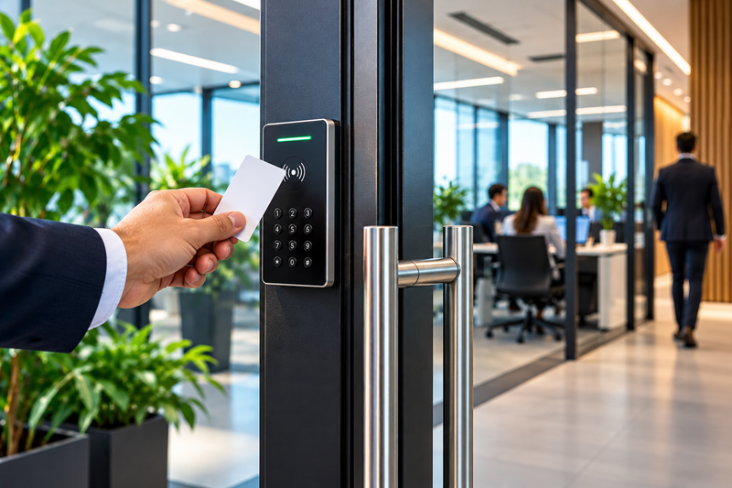
Workplace security is an essential priority for businesses that want to protect employees, visitors, company assets, and confidential information. Without effective security measures, offices and commercial buildings may face risks such as unauthorized entry, theft, security breaches, and difficulties managing access to restricted areas. Implementing the right security technology can help businesses reduce these risks and create a safer working environment.
Access control systems provide an effective way to manage who can enter a building, when they can enter, and which areas they are authorised to access. From small offices to large commercial premises, these systems help businesses improve security while making everyday access management more efficient.
For organisations looking to strengthen workplace protection, professional access control system installation in London can provide a practical solution tailored to their operational requirements. AY Security Systems helps businesses improve premises security through suitable security technologies designed to support controlled access and employee safety.
What Is an Access Control System and How Does It Work?
An access control system regulates entry to buildings, offices, and restricted areas. Instead of relying entirely on traditional keys, businesses can use electronic credentials to verify identities and grant or deny access.
Modern access control systems use different technologies, including key cards, PIN codes, biometric identification, mobile credentials, and electronic door locks. These systems allow authorised employees to enter designated areas while preventing access by individuals without the required permissions.
A typical door access control system includes electronic locks, access readers, credentials, and a central management platform. Depending on the system, administrators can assign access permissions, review entry records, and update employee access rights when responsibilities change.
For example, a business may allow employees to enter the main office while restricting access to server rooms, stockrooms, and confidential document storage areas. This approach supports better building access control and helps businesses maintain greater oversight of their premises.
Why Workplace Security is Essential for Modern Businesses
Businesses must consider more than protecting physical property when developing their workplace security strategy. Employee wellbeing, visitor management, confidential information, and operational continuity are also important considerations.
Poorly controlled access can make it easier for unauthorised individuals to enter business premises. It can also create challenges when managing contractors, temporary workers, visitors, and employees who require different levels of access.
Effective workplace security systems help address these concerns by establishing clear entry procedures and reducing reliance on manual security checks alone. They also help businesses identify potential vulnerabilities and improve their overall security arrangements.
A well-planned security strategy can support several business objectives:
- Protecting employees and authorised visitors.
- Reducing the risk of unauthorised entry and theft.
- Restricting access to sensitive information and equipment.
- Improving visibility into building entry and exit activity.
- Supporting workplace safety procedures.
- Strengthening the protection of commercial premises.
Combining suitable security technologies with clear workplace policies helps businesses create an environment where employees can work with greater confidence.
7 Ways Access Control Improves Workplace Security and Employee Safety
Access control systems help businesses prevent unauthorized entry, protect sensitive areas, monitor access activity, and manage employee permissions, creating a safer workplace while improving security and protecting valuable business assets.
1. Prevents Unauthorised Entry
One of the main advantages of access control for workplace security is its ability to restrict entry to authorised individuals. Traditional keys can be copied, misplaced, or shared without permission, making it difficult to maintain consistent control over building access.
Electronic access systems provide businesses with greater flexibility when managing entry permissions. Employees can receive individual access credentials, while visitors and contractors can be granted temporary or limited access where appropriate.
If an employee leaves the organisation or loses an access card, an administrator can deactivate the relevant credential without replacing every lock in the building. This helps reduce security risks associated with lost keys and outdated access permissions.
For offices with multiple entrances, controlled access points can help businesses establish consistent security procedures across the premises.
2. Restricts Access to Sensitive Areas
Not every employee needs access to every part of a workplace. Server rooms, finance departments, storage facilities, laboratories, and rooms containing confidential records may require additional protection.
Commercial access control systems allow businesses to create different permission levels based on job responsibilities and operational needs. For example, finance employees may be authorised to enter a records room, while other staff members can access only shared office spaces.
This approach supports employee access management by ensuring that permissions are assigned according to genuine business requirements.
Restricting access to sensitive areas can also reduce opportunities for theft, accidental damage, and unauthorised handling of valuable equipment or confidential documents. Regularly reviewing permissions helps businesses ensure that employees retain only the access they need.
3. Improves Employee Safety During Working Hours
Employee safety is an important consideration for any organisation. Businesses need procedures that help protect staff from unauthorized visitors, unwanted entry, and other physical security risks.
A properly configured access control system can help reception teams and security personnel manage building entry more effectively. Employees can use authorised credentials, while visitors can follow a designated check-in process before entering the workplace.
Some systems can also integrate with CCTV, alarms, and other workplace security technologies to provide a more coordinated approach to monitoring and incident response.
These measures can help employees feel more secure, particularly in workplaces that handle valuable assets, operate outside standard business hours, or have areas with restricted access.
Access control should form part of a wider employee safety strategy that includes emergency procedures, suitable lighting, staff training, and appropriate fire safety arrangements.
4. Tracks Entry and Exit Activity
Understanding who enters a building and when they arrive can help businesses manage security more effectively. Many electronic access control systems maintain activity logs that record events such as successful entry attempts, denied access, and the use of particular credentials.
Depending on the system and its configuration, authorised administrators can review these records when investigating an incident or identifying unusual access patterns.
For example, repeated attempts to enter a restricted room may indicate that access permissions need to be reviewed or that further investigation is necessary.
Access records can also support visitor management and internal security reviews. However, businesses should handle employee access data responsibly and follow applicable data protection and workplace privacy requirements.
When combined with appropriate security procedures, entry and exit records provide useful information that can help organisations improve their security arrangements.
5. Supports Emergency Response Procedures
During an emergency, businesses need clear procedures for protecting employees, visitors, and contractors. Access control technology can support these procedures when it is designed and integrated appropriately.
For example, some systems can be configured to interact with fire alarm systems, emergency door releases, and other safety equipment. These integrations may help ensure that designated doors release or operate according to the building’s approved emergency arrangements.
The exact behaviour depends on the door hardware, system configuration, fire safety requirements, and applicable regulations. Access control should never prevent occupants from escaping during an emergency.
Businesses should also ensure that employees understand evacuation routes, assembly points, and emergency reporting procedures. Regular testing and maintenance are important to confirm that security equipment operates as intended.
By considering emergency requirements during system design and installation, organisations can balance controlled access with safe and efficient evacuation.
6. Protects Business Equipment and Confidential Information
Workplaces often contain valuable laptops, specialist equipment, inventory, financial records, and confidential business information. Unrestricted access can increase the risk of theft, damage, or unauthorised handling of these assets.
Building access control helps businesses limit entry to areas where valuable or sensitive resources are stored. Access permissions can be assigned according to employee responsibilities, reducing unnecessary access to protected spaces.
When integrated with office CCTV installation, access control can provide additional context during security investigations. For example, access logs may help establish when a credential was used, while CCTV footage may provide visual information about activity at a monitored entrance.
Neither technology guarantees that every incident will be prevented, but using them together can improve security visibility and support more informed investigations.
Businesses should also combine physical security measures with appropriate cybersecurity practices, including secure account access, data protection policies, and regular reviews of employee permissions.
7. Simplifies Employee Access Management
Managing access manually can become complicated as a business grows, relocates departments, or changes employee responsibilities. Traditional keys may need to be collected, locks may require replacement, and access permissions can become difficult to track.
Modern office access control systems allow authorised administrators to update credentials and permissions more efficiently. New employees can be assigned appropriate access, while departing employees can have their credentials deactivated promptly.
Businesses can also establish different permissions for permanent staff, temporary workers, contractors, and visitors.
Depending on the system, administrators may be able to manage multiple doors or locations through a central platform. This can simplify routine administration and help maintain more consistent security procedures.
Effective employee access management ensures that permissions remain aligned with current job responsibilities and reduces the likelihood of outdated credentials creating unnecessary security risks.
Interesting Read: Top 7 Benefits of Access Control Systems for Commercial Properties
Types of Access Control Systems for Offices and Commercial Buildings
Choosing the right access control technology depends on the building layout, number of employees, required security level, and available budget. Businesses should assess their needs before selecting a system.
1. Card-Based and Key Fob Access Systems
Card and key fob systems allow employees to unlock authorised doors using electronic credentials. They are commonly used in offices and commercial buildings because credentials can be issued, managed, and deactivated as required.
These systems are suitable for businesses that need straightforward access management across multiple entrances.
2. PIN-Based Access Control
PIN-based systems require users to enter an authorised code to gain access. They can be useful for selected entrances, staff-only rooms, and areas that require additional restrictions.
Businesses should establish secure PIN practices and change codes when necessary to reduce the risk of unauthorised sharing.
3. Biometric Access Control
Biometric systems use identifying characteristics, such as fingerprints or other supported biometric data, to verify users. They may be suitable for locations that require more tightly controlled access.
Before implementation, businesses should consider privacy, data protection, accessibility, and the secure handling of biometric information.
4. Mobile Access Control
Mobile access systems allow authorised users to unlock doors using supported smartphones or other mobile devices. Depending on the technology, credentials may be managed through an application or another secure authentication method.
Mobile access can provide convenience for workplaces that want to reduce dependence on physical cards while maintaining controlled entry.
5. Integrated Access Control and CCTV Systems
Integrating access control with CCTV can help businesses coordinate entry management and visual monitoring. This combination can improve visibility around entrances and provide useful evidence when reviewing security incidents.
The most suitable solution depends on the premises, operational requirements, and the compatibility of the selected equipment.
How to Choose the Right Access Control System for Your Workplace
Selecting the right access control systems for modern workplaces starts with understanding your business risks, building layout, and security requirements. A solution suitable for a small office may not meet the needs of a multi-floor commercial building with restricted departments.
Consider the following factors when evaluating access control systems:
- Building layout: Identify the entrances, exits, internal doors, and restricted areas that require controlled access.
- Employee numbers: Consider how many staff members, visitors, and contractors will need credentials.
- Access permissions: Determine which users should have access to particular areas and at what times.
- Integration requirements: Check whether the system can work with existing CCTV, alarms, door hardware, and other security equipment.
- Scalability: Choose technology that can accommodate future changes in staffing, premises, and security requirements.
- Maintenance and support: Confirm that suitable technical support, testing, and maintenance arrangements are available.
- Safety and compliance: Ensure the proposed installation meets relevant fire safety, accessibility, electrical, and data protection requirements.
A professional assessment can help identify vulnerabilities and determine which features are genuinely necessary. This reduces the risk of investing in equipment that does not meet the business’s practical needs.
Why Professional Access Control Installation Matters
Even high-quality security equipment may fail to deliver the intended protection if it is poorly designed, incorrectly installed, or inadequately maintained. Professional installation helps ensure that access readers, electronic locks, door hardware, and management software work together as intended.
Businesses looking for access control system installation in London should consider a provider that can assess the premises, recommend appropriate equipment, and configure access permissions according to operational requirements.
Professional installers can also identify potential issues involving door compatibility, emergency exit arrangements, wiring, network connectivity, and integration with existing security systems.
For organisations in Harrow, working with an experienced door access control system installation provider can help ensure that the solution is appropriate for the building and its day-to-day use.
When comparing an access control system installer in London or an access control system installer in Harrow, businesses should consider relevant experience, installation standards, aftercare, and the provider’s ability to explain system capabilities clearly.
AY Security Systems can be considered by businesses evaluating security installation services for their premises. The appropriate solution should be based on a site assessment and the specific security requirements of the organisation.
Interesting Read: 10 Reasons Your Small Business Needs an Access Control System
Combining Access Control with CCTV for Better Workplace Protection
Access control and CCTV serve different but complementary security purposes. Access control manages permissions at doors and other entry points, while CCTV helps monitor activity in designated areas.
When these technologies are integrated, businesses can gain a clearer understanding of activity around important access points. For example, an access log may show that a credential was used at a particular time, while relevant CCTV footage may help establish what happened at the entrance.
A suitable office CCTV installation can support monitoring of reception areas, entrances, corridors, loading areas, and other appropriate locations. Camera placement should account for privacy, operational needs, and applicable legal requirements.
Integration can also help security personnel investigate denied access attempts, unusual activity, and potential security breaches more efficiently.
However, the effectiveness of an integrated system depends on proper configuration, reliable equipment, suitable data retention practices, and regular maintenance.
Businesses should assess access control and CCTV together as part of a broader security strategy rather than treating either technology as a complete solution on its own.
Why Choose AY Security Systems for Workplace Security Solutions?
Businesses need security solutions that reflect their premises, working practices, and protection requirements. AY Security Systems can help organisations evaluate their security needs and consider suitable options for managing access to commercial buildings.
When planning workplace security improvements, businesses should look for solutions that support controlled entry, effective access management, and appropriate integration with existing security equipment.
A well-planned installation should consider:
- Business-specific requirements: Security arrangements should reflect the building layout, employee numbers, and restricted areas.
- Controlled building access: Access permissions should be appropriate for each user’s responsibilities.
- Integrated security options: Compatible access control and CCTV technologies can provide complementary protection.
- Practical system management: Administrators should be able to manage credentials and update permissions efficiently.
- Safety-focused planning: Emergency exits and relevant building safety requirements must remain a priority.
For businesses considering access control system installation in London or Harrow, AY Security Systems can help assess your premises and security needs. Contact an experienced security system installer in Harrow to discuss a suitable solution for your business.
Improve Workplace Security with AY Security Systems
A secure workplace depends on more than locking doors at the end of the day. Businesses need effective ways to manage entry, protect sensitive areas, monitor security activity, and support employee safety throughout working hours.
Modern access control systems help organisations establish clearer access permissions, manage employee credentials, and reduce the risks associated with uncontrolled entry. When combined with suitable CCTV and other workplace security measures, they can contribute to a more coordinated approach to protecting commercial premises.
AY Security Systems can help businesses explore suitable security solutions based on their premises and operational needs. If you are considering access control system installation in London or Harrow, contact AY Security Systems to discuss your requirements and identify an appropriate approach to improving workplace security.
Frequently Asked Questions About Workplace Access Control
How Does an Access Control System Improve Workplace Security?
An access control system restricts entry to authorised individuals, limits access to sensitive areas, and can maintain records of access activity. These features help businesses manage entry more effectively and reduce certain risks associated with unauthorised access.
Which Access Control System Is Best for an Office?
The best system depends on the office layout, number of employees, required security level, and budget. Card readers, PIN-based systems, mobile credentials, and biometric solutions are all potential options. A professional assessment can help identify the most suitable choice.
Can Access Control Systems Be Integrated with CCTV?
Yes. Compatible access control and CCTV systems can work together to support security monitoring and incident investigation. Access logs and relevant video footage may provide complementary information about activity around monitored entrances.
Is Access Control Suitable for Small Businesses?
Yes. Small businesses can use access control to manage entry, protect valuable equipment, and restrict access to selected rooms. The system can be scaled according to the premises and the organisation’s security requirements.
Why Should Businesses Use Professional Access Control Installers?
Professional installation helps ensure that the equipment is compatible, permissions are configured correctly, and door operation meets relevant safety requirements. Installers can also advise on system integration, testing, maintenance, and future expansion.
Do Access Control Systems Help Improve Employee Safety?
Access control can contribute to employee safety by restricting unauthorized entry, managing visitor access, and supporting other security measures. It should be combined with staff training, emergency planning, and appropriate workplace safety procedures.