Healthcare facilities require a higher level of security than many commercial buildings because they protect people, sensitive information, valuable medical equipment, medications, and restricted clinical areas. Effective access control for healthcare facilities helps us manage who can enter specific areas, when they can enter, and what access privileges they should have.
A well-designed access control strategy can help protect patients, healthcare professionals, visitors, medical records, pharmaceutical supplies, IT infrastructure, and other critical assets. We combine controlled entry with appropriate monitoring, alarms, visitor management, and fire safety protection to create a more comprehensive approach to healthcare facility security.
At AY Security Systems, we provide professionally planned security solutions designed around the individual requirements of healthcare and commercial facilities across London and Harrow. Our services also include access control system installation in London, helping businesses and healthcare facilities manage secure entry and improve overall site security.
What is Access Control for Healthcare Facilities?
Access control for healthcare facilities refers to the systems, technologies, and procedures used to control entry into buildings, rooms, departments, and restricted areas. Modern electronic systems allow us to determine who can enter, where they can go, and when they can access specific areas.
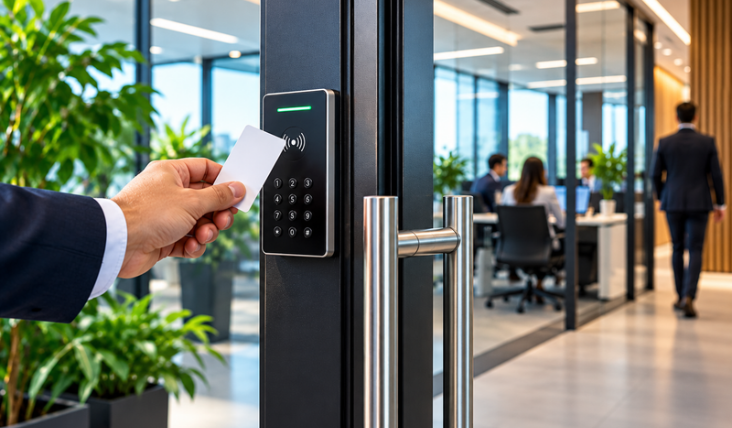
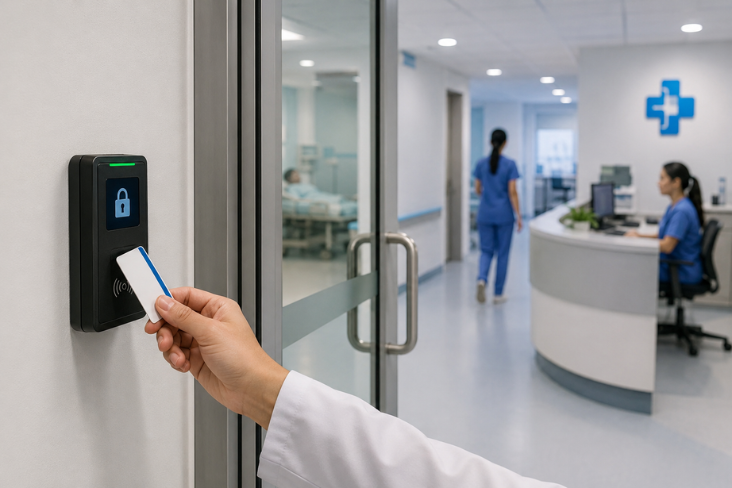
Traditional mechanical locks generally provide limited visibility after a key has been issued. Modern healthcare access control systems can provide greater control by assigning individual credentials and recording access events. Depending on the facility, credentials may include proximity cards, key fobs, PINs, mobile credentials, or biometric identification.
We can also create role-based permissions. For example, clinical staff may require access to treatment areas, while administrative employees may only need access to offices and reception areas. Security teams can then modify or remove permissions as staffing arrangements change.
Why Healthcare Facilities Need Controlled Access
Healthcare facilities contain areas with different security requirements. Controlled access can help us:
- Protect patients and vulnerable individuals.
- Restrict unauthorised access to sensitive areas.
- Protect medications and medical equipment.
- Safeguard confidential patient information.
- Improve staff and visitor management.
- Support patient safety and security.
- Create a clearer record of access activity.
This approach is particularly important in environments where patients may be vulnerable, medications may require protection, and confidential information must be handled securely.
Key Areas That Need Access Control in Healthcare Facilities
Different parts of a healthcare building require different levels of protection. Hospital access control can be configured according to the function and risk level of each area.
1. Patient Rooms and Clinical Areas
Patient rooms, treatment rooms, operating areas, laboratories, and other clinical spaces may need controlled access to help maintain privacy and safety. Authorised healthcare workers can be provided with appropriate credentials while unnecessary access can be restricted.
In sensitive departments, access control can also help security personnel understand who entered an area and when, supporting incident investigation and accountability.
2. Pharmacies and Medication Storage
Pharmacies and medication storage areas can require enhanced security because they may contain controlled or high-value medicines. Electronic access control can limit entry to authorised personnel and provide an audit trail of access activity.
Additional security measures may include CCTV, alarms, restricted doors, and monitoring procedures.
3. Medical Records and IT Rooms
Healthcare organisations manage highly sensitive information and critical technology infrastructure. Medical records areas, server rooms, communications rooms, and other IT spaces should therefore receive appropriate protection.
By restricting access to authorised personnel, we can reduce unnecessary physical access to equipment and sensitive information systems.
4. Emergency Departments and Restricted Areas
Emergency departments operate under demanding conditions and require security systems that balance protection with rapid access for authorised personnel.
Access control can help restrict unauthorized movement while allowing designated healthcare workers to enter critical areas efficiently. Emergency procedures should always be considered when configuring controlled doors and access permissions.
5. Staff-Only and Administrative Areas
Staff rooms, offices, storage areas, financial departments, and administrative spaces can also benefit from controlled access.
Role-based permissions allow us to provide employees with access that corresponds to their responsibilities without giving every user unrestricted access throughout the facility.
Best Access Control Systems for Healthcare Facilities
There is no single access control technology suitable for every medical facility. We select systems according to building layout, security requirements, user numbers, operational procedures, and integration requirements.
1. Keycard and Proximity Card Systems
Keycard and proximity card systems are widely suitable for healthcare environments because credentials can be individually assigned and managed.
If an employee loses a card, access can generally be disabled without replacing the entire locking system. New credentials can also be issued when staff members join the organisation.
2. PIN and Keypad Access
Keypad systems allow authorised users to enter a PIN to gain access. They can be useful for selected restricted areas where a physical card is not preferred.
We recommend secure PIN practices, including avoiding easily predictable combinations and changing codes when appropriate.
3. Biometric Access Control
Biometric systems may use fingerprints, facial recognition, or other biometric identifiers. These technologies can provide an additional layer of identity verification for areas requiring enhanced protection.
Their suitability depends on the facility’s operational, privacy, technical, and security requirements.
4. Mobile and Smart Access Control
Mobile access systems allow authorised users to use smartphones as credentials. This can provide convenience for staff while allowing administrators to manage permissions electronically.
Mobile credentials can be particularly useful for facilities with a large workforce or changing access requirements.
5. Integrated Access Control Systems
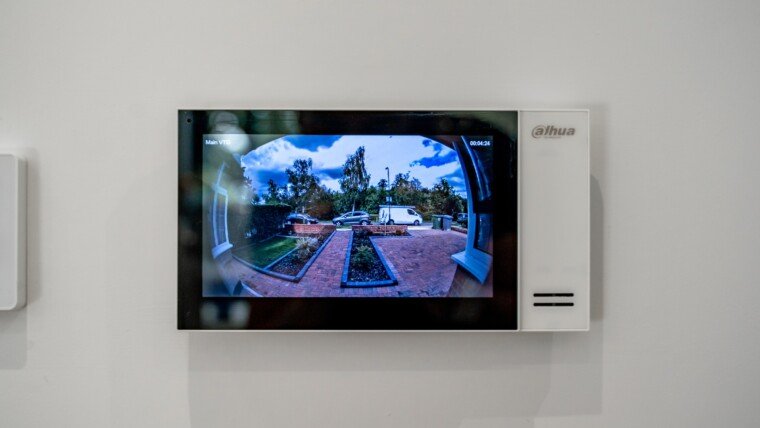
Integrated systems can connect access control with CCTV, alarms, intercoms, and other security technologies. This creates a more centralised approach to healthcare security management.
When an access event occurs, integrated security technologies can provide additional information that helps security personnel assess the situation.
Healthcare Security Best Practices for Access Control
Effective access control depends on more than installing electronic locks. We focus on combining technology with appropriate procedures, monitoring, staff training, and regular system management.
- Use Role-Based Access Permissions
Access should correspond to each employee’s responsibilities. A member of the clinical team may require different permissions from an administrator, cleaner, contractor, or facilities manager.
Providing only the access required for a particular role helps reduce unnecessary security exposure.
- Regularly Review Access Permissions
Access permissions should be reviewed regularly. When an employee leaves the organisation, their credentials should be removed promptly.
We should also update permissions when staff members change departments, responsibilities, or working arrangements. Regular access audits help identify outdated or excessive permissions.
- Protect High-Risk and Restricted Areas
Pharmacies, laboratories, server rooms, records departments, plant rooms, and other sensitive spaces may require enhanced protection.
We can combine access control with CCTV, alarms, door monitoring, and other security measures where appropriate.
- Maintain Detailed Access Logs
Electronic access logs can record information about entries and exits. These records can help authorised security and management personnel investigate unusual access events and understand the sequence of activity surrounding an incident.
- Train Staff on Security Procedures
Technology works most effectively when employees understand how to use it correctly. Staff should know how to protect cards, credentials, PINs, and mobile devices.
We also encourage employees to report lost credentials, suspicious behaviour, forced doors, and other unusual activity promptly.
- Have Emergency Access Procedures
Emergency procedures should account for access-controlled doors. Authorised personnel must be able to reach critical areas when required while emergency and evacuation procedures remain effective.
Access control should therefore be planned alongside the facility’s wider emergency arrangements.
- Keep Systems Updated and Maintained
Regular maintenance helps identify damaged readers, faulty locks, communication problems, software issues, and other potential weaknesses.
We recommend scheduled inspections and professional servicing to keep security infrastructure reliable and suitable for the facility’s current requirements.
Integrating Access Control With Other Healthcare Security Solutions
Access control should form part of a broader security strategy rather than operate as an isolated technology.
1. CCTV Integration
Connecting healthcare door access control with CCTV can provide security teams with additional visual information about access events.
For example, when an authorised credential is used at a restricted entrance, CCTV footage can help verify activity where appropriate. Professional CCTV installation services in London can be planned alongside access control to create a coordinated security environment.
2. Fire Alarm and Intrusion Detection
Fire can complement access control by identifying unusual or unauthorised activity. Forced doors, repeated access attempts, or other predefined events may trigger alerts depending on the system configuration.
3. Fire Safety and Emergency Systems
Access-controlled doors must be planned carefully alongside emergency procedures and fire safety protection. Security measures should never undermine safe evacuation or emergency response requirements.
4. Visitor Management
Visitor management can help healthcare facilities control temporary access. Visitors, contractors, and other non-permanent users can be managed according to the facility’s procedures and permitted areas.
How Access Control Supports Patient Safety and Security
Patient safety is one of the most important considerations when designing healthcare security.
Controlled access can help reduce unauthorized entry and provide additional protection in maternity units, paediatric departments, psychiatric facilities, treatment areas, and other sensitive environments.
Access control can also help protect medical equipment, medications, confidential records, and staff-only spaces. When combined with appropriate security procedures, it contributes to a safer environment for patients, employees, contractors, and visitors.
Choosing the Right Access Control System for a Healthcare Facility
Before selecting a system, we assess several important factors.
- Facility Size and Layout
The number of entrances, departments, floors, doors, and restricted areas influences the type and complexity of the required system.
- Number of Employees and Users
A small private clinic may require a relatively simple solution, while a large hospital can require centralised management for hundreds or thousands of users.
- Security Requirements of Different Areas
Not every door requires the same level of protection. We can assign different technologies and permission levels according to the sensitivity of each location.
- Scalability and Future Expansion
A scalable system can accommodate additional doors, employees, departments, and facilities as the organisation grows.
- Integration With Existing Security Systems
Compatibility with existing CCTV, alarms, intercoms, and other security infrastructure can improve overall system management.
- Ease of Management and Maintenance
Administrators should be able to manage users, credentials, permissions, and access records efficiently.
- Reliability and System Availability
Healthcare environments require dependable security infrastructure. System reliability, backup arrangements, maintenance, and technical support should therefore be considered during system selection
- Professional Installation and Support
Professional planning and installation help ensure that access control hardware is positioned correctly, configured appropriately, and integrated with other security systems.
Professional Access Control System Installation in London
Professional installation is an important part of developing reliable healthcare security infrastructure. We begin by assessing the building, identifying access requirements, reviewing existing security measures, and determining which doors and areas require controlled access.
Our access control system installation in Harrow services can be planned around the specific requirements of medical centres, clinics, hospitals, offices, and other commercial facilities.
Professional access control installation in London also helps ensure that readers, locks, controllers, credentials, and software are configured correctly. An experienced access control system installer in London can coordinate access control with existing CCTV and other security infrastructure.
Can Access Control Systems Be Used in Offices and Other Facilities?
Yes. Access control is not limited to hospitals and healthcare premises. Offices, educational facilities, warehouses, retail premises, apartment buildings, and other commercial properties can use similar technologies.
Door Access Control System for Offices
A door access control system installation can help offices control employee entry, restrict access to meeting rooms and server rooms, manage visitor movement, and protect sensitive business areas.
Office security requirements are often less complex than healthcare requirements, but the same principles apply: users should receive appropriate permissions, credentials should be managed securely, and access should be reviewed regularly.
Why Choose AY Security Systems for Healthcare Security?
At AY Security Systems, we focus on developing security solutions around the individual requirements of each facility.
Our approach can include:
- Professional security assessments.
- Access control system design and installation.
- Healthcare and commercial security solutions.
- CCTV integration.
- Alarm and monitoring integration.
- Ongoing maintenance and technical support.
- Local service coverage across London and Harrow.
- Reliable hospital security solutions.
- Practical medical facility security planning.
We assess the facility, identify security priorities, and recommend an access control solution that supports the organisation’s operational requirements.
Conclusion
Effective access control for healthcare facilities provides an important layer of protection for patients, staff, visitors, medications, medical equipment, confidential information, and restricted areas. By combining role-based permissions, access monitoring, regular audits, staff training, maintenance, and emergency procedures, we can create a more controlled and accountable security environment.
Access control should also form part of a wider healthcare security management strategy. CCTV, alarms, visitor management, and fire safety protection can complement controlled entry and provide broader protection throughout the facility.
At AY Security Systems, we can assess your healthcare or commercial premises, identify appropriate access requirements, and develop a professional security solution covering access control, CCTV, alarms, and related systems. We also provide security system installation services in Harrow, London, tailored to your specific security needs. Contact AY Security Systems to discuss your facility and find an access control solution designed around your security requirements.
Frequently Asked Questions About Healthcare Access Control
What is the best access control system for a hospital?
The best system depends on the hospital’s size, layout, number of users, restricted areas, security requirements, and existing infrastructure. A professionally designed solution may combine cards, mobile credentials, biometrics, CCTV, alarms, and centralised management.
Why is access control important in healthcare facilities?
Access control helps restrict unauthorized entry to patient areas, medication storage, records departments, IT rooms, staff areas, and other sensitive locations while providing better visibility over access activity.
How does access control improve patient safety?
Controlled entry can help prevent unauthorized individuals from entering sensitive patient areas. It can provide additional protection for vulnerable patients and support security procedures in maternity, paediatric, psychiatric, and other specialised departments.
Can access control be integrated with CCTV?
Yes. Access control can be integrated with CCTV and other security technologies. This can allow security personnel to associate access events with relevant video information and improve situational awareness.
How often should healthcare access permissions be reviewed?
Access permissions should be reviewed regularly and whenever employees join, leave, change departments, or receive new responsibilities. The exact review schedule should reflect the facility’s risk profile and internal security procedures.
How much does access control installation cost in London?
The cost varies according to the number of doors, access points, users, technology selected, installation requirements, integration with existing systems, and ongoing support needs. A site assessment provides a more accurate quotation.
Do healthcare facilities need professional access control installation?
Professional installation is strongly recommended for complex healthcare environments because access control must be configured according to building layout, security requirements, user permissions, emergency procedures, and existing security infrastructure.
Can access control systems be used for office doors?
Yes. Access control systems can be installed on office doors to manage employee entry, protect restricted rooms, control visitor access, and improve overall commercial security.